
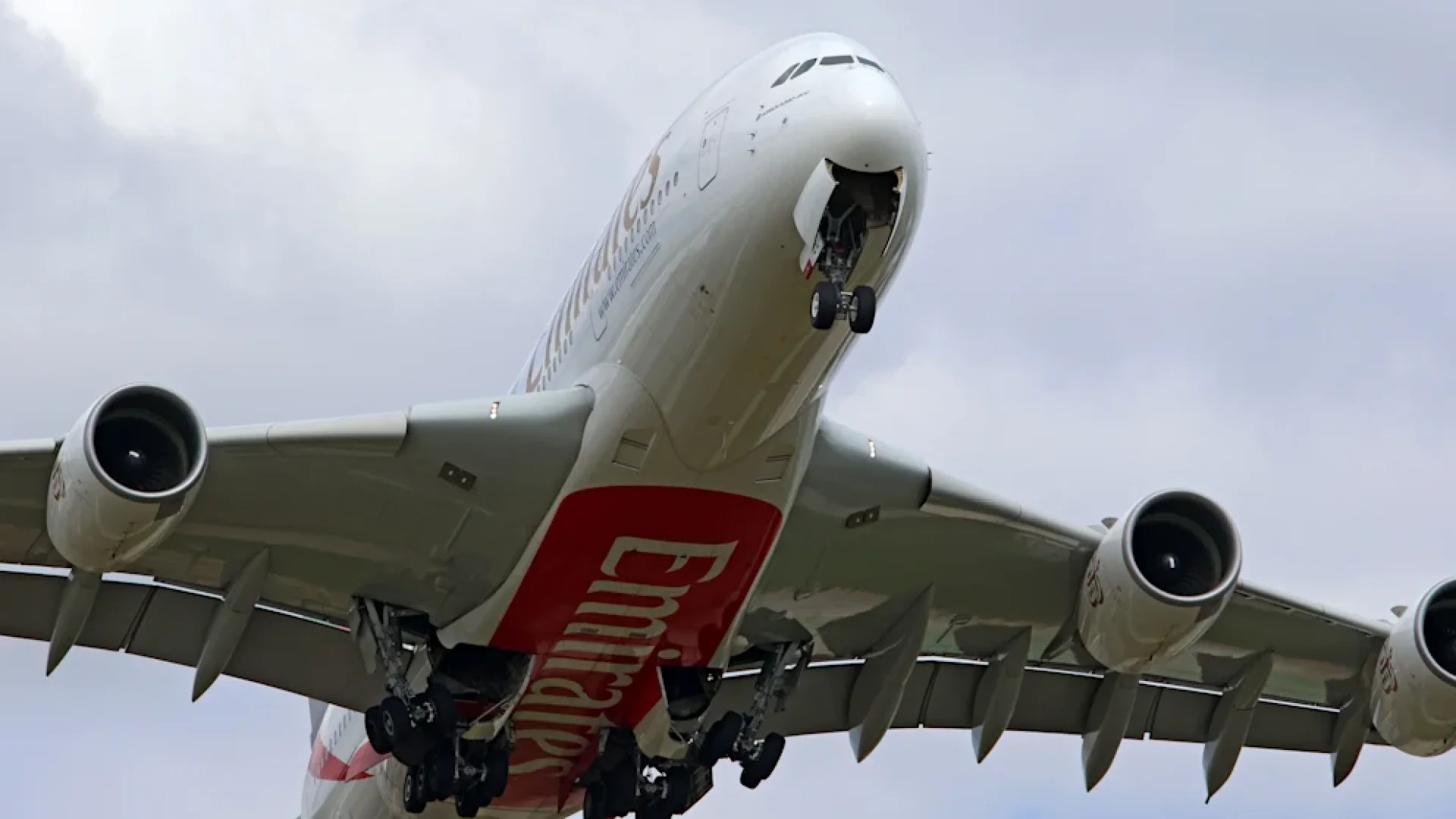

Dubai’s airport is humming again as Emirates gradually restores operations and signals continuity. At the same time, Lufthansa is extending its halt on certain Middle East routes into October—an unusually long planning decision that points to persistent risk assessments. The split response is creating a new map of detours, longer flight times, and shifting hubs. For Dubai, every returning widebody is more than a flight: it’s a pulse check for tourism, trade, and investor sentiment.
The first thing you notice is the sound. Not the announcements—those are everywhere—but the deep, rolling thunder of a widebody turning onto the taxiway. In Dubai, that noise is comfort. It means motion. It means connections. It means the city is doing what it was built to do: pull the world in, then send it back out again.
On the boards, more Emirates flights are showing up again—steady, deliberate, like a heartbeat returning after a scare. A ground handler leans into a headset, half-listening to a colleague, half-watching the wingtip lights glide past. “Busy again,” he says, and it’s not bragging. It’s relief.
And then, in the same week of headlines, the counter-melody: Lufthansa is extending its suspension of certain Middle East services into October. Not days. Not “through the weekend.” October. In aviation language, that’s a long sentence. It changes schedules, crew planning, aircraft rotations—and the psychology of passengers who want a simple answer to a complicated sky.
Emirates’ move reads like a statement of operational resilience: we can adjust, reroute, scale back where needed, and still keep the hub alive. Lufthansa’s extension reads like a statement of caution: we don’t like the risk picture, and we’re building a buffer into our network planning.
Neither approach is purely emotional. Both are the product of security assessments, airspace constraints, insurance considerations, crew duty limits, and the cascading mathematics of global timetables. But to travelers, the message lands in the gut.
At a café near a gate, a consultant in a wrinkled blazer scrolls through emails with the intensity of someone defusing a device. “I’ve been rebooked three times,” he mutters. The barista slides over a coffee. “Good luck,” she says. He nods like luck is now part of the ticket.
An extended suspension is not just a flight cancellation; it’s a network decision. Airlines don’t make it lightly. It implies they expect the operating environment to remain uncertain long enough that constant stop-start operations would be riskier—and more disruptive—than simply stepping back.
For passengers, it tends to trigger three immediate consequences:
For business travel managers, it’s a policy moment. Duty-of-care teams ask sharper questions. Insurers request updates. Corporate calendars quietly reshuffle: fewer “day trips,” more “two-day buffers,” more video calls replacing marginal travel.
Dubai doesn’t treat aviation as a sector. It treats it as infrastructure—like water and electricity, but with jet fuel and passports. When Emirates expands again, it doesn’t just restore seats; it restores confidence across a web of industries that depend on frictionless arrivals.
In the hotel lobbies, you can feel the difference before you see it in data. More rolling suitcases. More check-ins that begin with, “We just flew in from…” The concierge who knows every exhibition schedule leans closer and says, “Business travelers come back first. They always do. They have deadlines.”
That matters because Dubai’s economy thrives on short, intense visits: conferences, property tours, trade delegations, medical appointments, stopovers that become weekend splurges. A functioning hub makes those trips easy. A strained hub makes them negotiable.
The aviation world is getting used to a kind of disciplined flexibility. A gate agent smiles, taps the keyboard, and delivers the sentence travelers hear more often than they’d like: “We can reroute you via…” It’s offered gently, as if changing the plan is a small thing. But the ripple is real—missed meetings, extra hotel nights, altered supply chains.
And supply chains are the quiet subplot. Passenger routes often carry belly cargo; when routes thin out or detour, capacity shifts. Time-sensitive shipments—from electronics to pharmaceuticals—can face higher costs or longer transit times. In a region built on speed, minutes add up fast.
In this split-screen reality—Emirates returning, Lufthansa waiting—confidence itself becomes a product. Some travelers will choose the carrier that keeps flying because it signals steadiness. Others will choose the carrier that pauses because it signals caution. The market doesn’t reward only one philosophy; it rewards clarity.
What’s undeniable is that hubs are being judged in real time. Not by slogans, but by departure boards. Not by press releases, but by whether the connection works when the first flight is late.
For real estate investors, especially those focused on global gateway cities, airline capacity is an early indicator of demand—and of liquidity. Dubai is a textbook case: when long-haul connectivity strengthens, the effects show up quickly in hospitality revenue, short-let performance, retail footfall, and the pace of international deal-making.
1) Hospitality and short-term rentals: A visible ramp-up by Emirates supports occupancy and pricing power in hotels, serviced apartments, and furnished rental stock. Assets that rely on international arrivals (near business districts, exhibition centers, or premium leisure zones) often experience faster demand recovery when flight frequency stabilizes.
2) Buyer mobility and transaction velocity: Extended suspensions by major European carriers can temporarily reduce on-the-ground buyer activity from specific source markets—not necessarily because sentiment collapses, but because travel becomes harder to justify. Conversely, if Dubai remains accessible through multiple carriers and routings, it can capture a relative advantage versus competing destinations with weaker connectivity.
3) Risk pricing and underwriting: Prolonged regional uncertainty can widen perceived risk premiums. Investors may respond with more conservative assumptions: higher vacancy buffers, slower absorption, or softer exit yields. The practical move is scenario modeling—stress-test cash flows against waves of demand rather than a straight-line recovery.
4) Sectors to watch:
5) An investor’s connectivity checklist: Track daily long-haul frequency, carrier diversification, routing alternatives, and the hub’s operational reliability. In a period where parts of Europe shift into caution mode, robust connectivity is not just convenience—it’s a competitive moat that can support rents, occupancy, and exit liquidity.